Abacus Mental Math for children aged 4–13, across six progressive levels—
in partner schools, at our Training Center, and through camps and competitions.
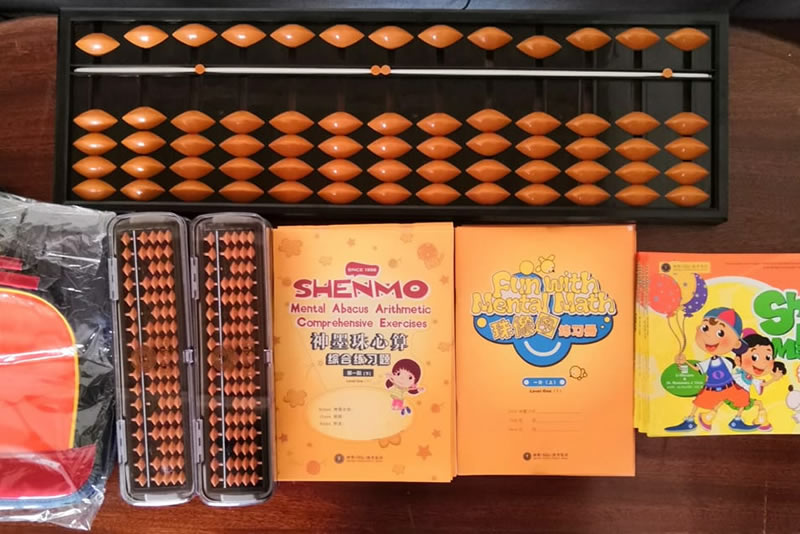
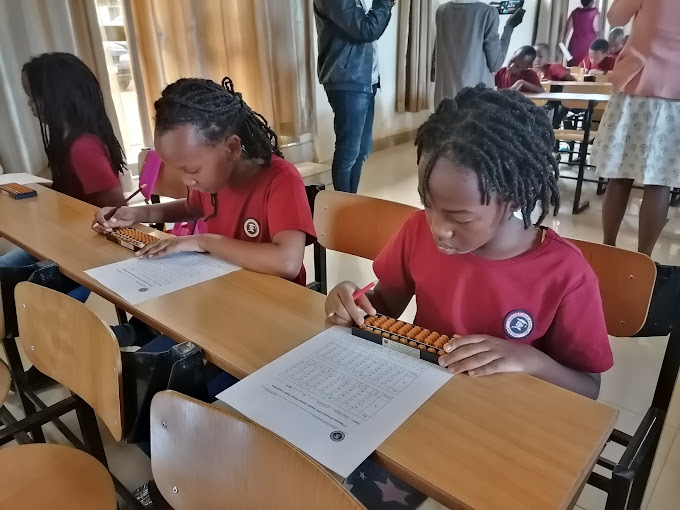
Children move beads on the abacus to add, subtract, multiply, and divide.
2
Guided training
Build speed, focus, and accuracy through fun, energetic lessons and drills.
3
Mental visualization
Picture the abacus in the mind and perform Abacus Mental Math independently.
Ages 4 to 13 are a prime developmental window for cognitive growth. Our curriculum
uses six progressive levels, from basic addition and subtraction to complex
multiplication, division, and advanced mental calculation.
Six Progressive Levels
Each level builds calculation fluency, concentration, and confidence. Certificates recognize
achievement as students advance. Contact us for current schedules and enrollment.
Level 1 — Number sense, correct finger technique, and basic addition and subtraction on the physical abacus.
Level 2 — Faster bead work, two-digit operations, and early dual-hand coordination.
Level 3 — Greater speed and accuracy; introduction to mental visualization of simple operations.
Level 6 — Advanced independent Abacus Mental Math for high-stakes drills and international pathways.
What a Typical Session Includes
Warm-up drills — Short focus and finger exercises to prepare concentration.
Guided abacus practice — Instructor-led bead work matched to the student’s level.
Mental visualization — Timed or coached practice calculating without touching the beads.
Review and encouragement — Feedback, certificates progress notes, and joyful reinforcement.
Sessions are energetic and structured. Parents and schools can ask about trial intro classes and
Training Center weekend or holiday schedules through the contact form.
How and Where Students Learn
Partner schools — Weekly Abacus Mental Math during the school program, with teacher coordination and class groups.
Training Center — Weekend and holiday classes at MIC Building, KN2 Avenue, Kigali—ideal for steady progress outside the school timetable.
Summer camps — Intensive practice blocks with graduation moments and parent meetings.
Many families combine school partnerships with Training Center practice. Tell us your child’s age and
schedule and we will help you choose the best path.
Competition Formats
Competitions use unlimited arithmetic questions in a fixed time. Difficulty follows each student’s level;
the score is the number of correct answers within the time limit.
Writing
Written problems that combine reading and mental calculation under time pressure.
Listening
Questions presented orally—training auditory processing and quick mental calculation.
Watching (Visual)
Numbers flashed on screen; students respond from visual input at speed.
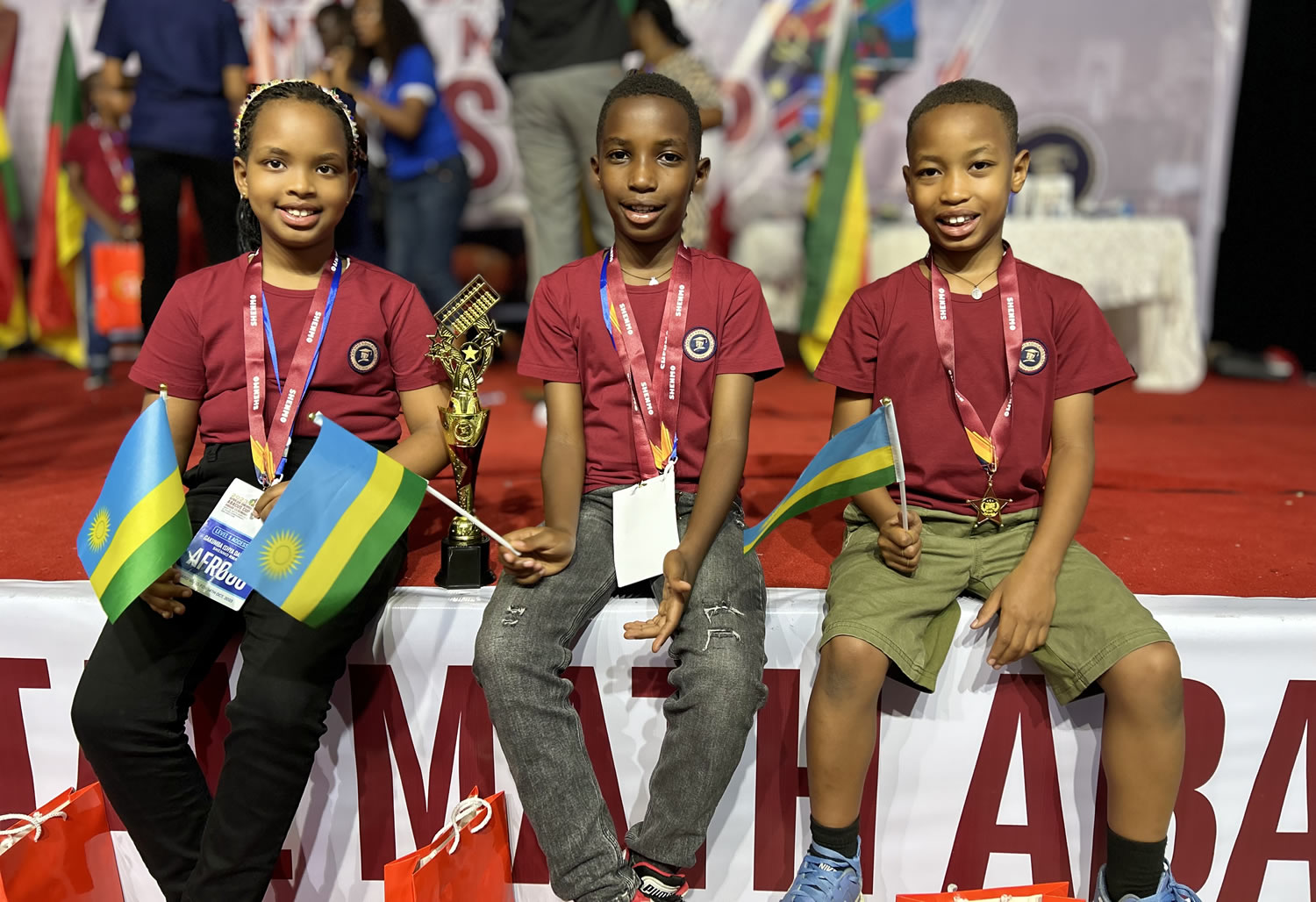
Pathways include national Shenmo Rwanda events, online olympiads, the Africa Shenmo Cup, and—when
ready—international Shenmo Cup stages.
Enroll or Partner
Parents — Ask about a trial intro class, Training Center schedules, or partner-school options.
Schools — Request a demo, teacher training discussion, or partnership aligned with REB goals.
Sponsors & partners — Support competitions, public-school pilots, and student participation.